The History and Lore of the Star Wars Opening Crawl Explored
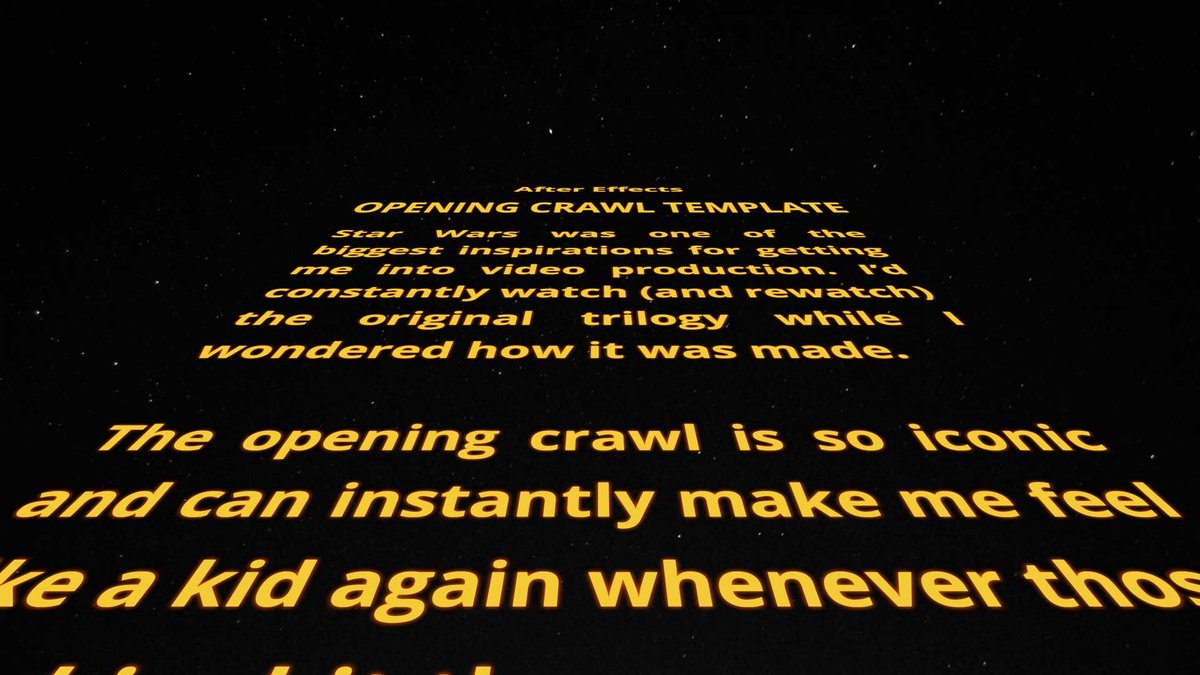
From the moment those iconic brass notes blare, followed by "A long time ago in a galaxy far, far away...", the Star Wars opening crawl isn't just an introduction—it's a sacred ritual. This scrolling wall of yellow text, vanishing into a star-strewn void, is arguably one of the most recognizable and beloved narrative devices in cinematic history. It's more than just a setup for the epic adventure; it's a direct portal into the heart of the saga, instantly immersing audiences into a universe of daring heroes, tyrannical empires, and the eternal struggle between light and darkness. Understanding The History and Lore of the Star Wars Opening Crawl reveals not just its practical purpose, but its profound impact on filmmaking and pop culture.
At a Glance: Your Quick Guide to the Star Wars Crawl
- Signature Device: Defines the opening of every numbered Star Wars film, setting backstory and context.
- Iconic Elements: Begins with "A long time ago...", followed by the receding logo, main theme, and scrolling yellow text.
- Narrative Function: Provides a concise, three-paragraph summary of events leading into the film.
- Inspiration: Heavily influenced by classic sci-fi serials like Flash Gordon and Buck Rogers.
- Collaborative Creation: George Lucas worked with Dan Perri (title design), Suzy Rice (graphic design), and Brian De Palma (editorial polish).
- Evolution in Production: Transitioned from labor-intensive physical models in the original trilogy to efficient computer-generated graphics for later films.
- Notable Exceptions: Not all Star Wars stories feature the crawl, particularly animated films and "anthology" films like Rogue One and Solo.
- Return Confirmed: Lucasfilm President Kathleen Kennedy has confirmed its return for upcoming Star Wars theatrical films.
The Genesis of a Galactic Icon: Tracing the Crawl's Roots
Before a single lightsaber ignited or an X-wing soared across the screen, George Lucas faced a unique challenge: how do you drop an audience, cold, into a sprawling, complex universe with its own rich history, political factions, and epic conflicts? The answer, he found, lay in the forgotten art of the cinematic serial.
Lucas was deeply influenced by the Saturday morning matinees of his youth, particularly the Flash Gordon and Buck Rogers serials. These pulp sci-fi adventures would often begin with a text scroll, quickly catching viewers up on the previous week's cliffhanger and setting the stage for the new chapter. It was a utilitarian device, but in Lucas's visionary hands, it would become something far grander. He envisioned an opening that didn't just convey information but actively built anticipation, transforming a necessary exposition into an integral part of the cinematic experience. This blend of nostalgic inspiration and groundbreaking ambition laid the groundwork for one of the most recognizable intros in movie history, a testament to George Lucas's creative process and his ability to innovate within familiar frameworks.
To bring this vision to life, Lucas enlisted the talents of collaborators. Film title designer Dan Perri was instrumental in translating Lucas's concept of a "moving text" into a practical on-screen effect, crafting the perspective projection that makes the text scroll up and away towards a vanishing point. Graphic designer Suzy Rice, fresh off her work for The Rocky Horror Picture Show, was tasked with developing the distinct typeface and overall visual feel. Her contribution helped define the yellow text and the overall aesthetic that would become synonymous with Star Wars.
However, the text itself needed to be more than just visually striking; it needed to be concise, dramatic, and poetic. Lucas's initial drafts were, by his own admission, far longer and more expository, sometimes stretching to six paragraphs. It was his good friend and fellow director, Brian De Palma, who brought the editorial scalpel. De Palma, known for his tight storytelling, famously helped Lucas condense and refine the lengthy narrative into the punchy, poetic three-paragraph summary we know today, giving it the mythological weight and rhythm that captivates audiences instantly. This collaborative effort transformed a simple narrative device into a powerful storytelling tool.
Anatomy of an Opening: Deconstructing the Crawl's Signature Elements
Every standard Star Wars opening sequence is a carefully choreographed ballet of sight and sound, designed to transport you instantly. It begins not with action, but with stillness, a quiet blue screen proclaiming, "A long time ago in a galaxy far, far away....". This phrase is more than just a preamble; it's a magical incantation, signaling a departure from our mundane world into a realm of myth and adventure.
Immediately following, the iconic Star Wars logo dramatically recedes over a field of stars, a visual flourish that creates a sense of immense scale and draws the viewer's gaze deeper into the cosmos. This visual is inseparable from John Williams's "Main Title Theme," a majestic, heroic fanfare that has become a cultural touchstone in its own right. The combination is a masterclass in powerful visual storytelling in Star Wars, setting the epic tone before a single character appears.
Then comes the yellow text, beginning its slow, majestic ascent from the bottom of the screen. Each crawl commences with the film's episode number and subtitle, immediately placing the story within the broader saga—a convention, notably, not present in the original 1977 release of Star Wars itself. This is followed by the core of the crawl: a three-paragraph summary of events. This synopsis isn't merely informative; it's crafted to be evocative, hinting at intrigue, danger, and the stakes of the impending adventure without giving away too much.
The text scrolls upward, shrinking as it approaches a vanishing point above the center of the screen, creating an illusion of infinite depth. Most crawls conclude with a distinctive four-dot ellipsis, leaving the narrative open-ended, a tantalizing "to be continued." However, Return of the Jedi uniquely uses a three-dot ellipsis, a subtle variation that keen-eyed fans often notice. As the text fades into the starry distance, the camera executes a final, dramatic move, tilting down through space to reveal a ship or planet, except for Episode II: Attack of the Clones, which memorably tilts up. This final flourish acts as a visual bridge, smoothly transitioning from the abstract text to the concrete reality of the film's opening scene.
Visually, two distinct typefaces contribute to the crawl's classic look: News Gothic, used for the episode number and the main body of the summary, and Univers, reserved exclusively for the film's title. This subtle typographic contrast helps to differentiate the title and give it prominence. Scattered throughout the text, certain words are rendered in all-capital letters for emphasis, signaling crucial plot points or important entities. Examples include "DEATH STAR" (A New Hope), "GALACTIC EMPIRE" (Return of the Jedi), "ARMY OF THE REPUBLIC" (Attack of the Clones), "FIRST ORDER" (The Force Awakens, The Last Jedi), and "EMPEROR PALPATINE" (The Rise of Skywalker). These capitalized words act as signposts, guiding the reader's eye to the most critical information and heightening the drama. It's also worth noting how aspect ratios affected the viewing experience; while designed for wider screens, "fullscreen" (4:3 aspect ratio) versions would often cut off the sides of the lines, making the text initially harder to read until it scrolled further up and became smaller.
The Evolution of a Visual Spectacle: From Physical Models to Digital Mastery
The enduring magic of the Star Wars opening crawl lies not just in its textual content but in its physical presence on screen. Achieving that iconic scrolling effect was, especially in the early days, an exercise in painstaking ingenuity and technical challenges, reflecting the intricate process of Star Wars film production during that era.
For the original trilogy films (A New Hope, The Empire Strikes Back, and Return of the Jedi), the crawls were not digitally generated. Instead, they were practical effects, brought to life through a laborious, old-school filmmaking technique. Industrial Light & Magic (ILM), George Lucas's legendary visual effects company, created physical models of the text. These models were impressively large, typically around 60 centimeters (about 2 feet) wide and 1.80 meters (about 6 feet) long. The text was printed onto these long strips, which were then placed on a mechanism that allowed a camera to move longitudinally, slowly tracking across the text. This process of filming physical models was incredibly difficult, requiring precise lighting, camera movement, and often multiple takes to achieve the perfect, smooth scroll without any jitters or imperfections. It was a time-consuming endeavor, a testament to the dedication of the filmmakers to achieve Lucas's vision.
With the advent of computer-generated graphics (CGI), the production of the crawls for the prequel trilogy (The Phantom Menace, Attack of the Clones, and Revenge of the Sith) and the subsequent 2004 DVD special editions of the original trilogy became much more streamlined. CGI allowed ILM to create the same iconic effect far more quickly and with greater control. Digital tools could precisely control the speed, perspective, and fade of the text, eliminating the physical constraints and arduous re-shoots of the practical model era. This transition meant that the spirit of the crawl remained intact, while the technical execution evolved significantly.
Beyond the English-language originals, ILM also undertook the task of producing versions of the crawl in numerous other languages, ensuring that audiences worldwide could experience the iconic introduction in their native tongue. This global reach further cemented the crawl's status as a universal symbol of cinematic adventure.
The Rebel Scramble: How A New Hope's Crawl Changed Over Time
The Star Wars opening crawl feels so intrinsically perfect, so immutably "Star Wars," that it's easy to assume it was always that way. Yet, the crawl for the very first film, what we now know as Episode IV: A New Hope, underwent a significant transformation after its initial release—a fascinating piece of its history that highlights the evolving vision for the saga.
When Star Wars premiered in 1977, its opening crawl was simply titled Star Wars. There was no "Episode IV," no "A New Hope." This omission wasn't a creative choice by George Lucas; it was a mandate from 20th Century Fox, the studio distributing the film. They felt that adding an episode number or subtitle would confuse audiences, making it seem as if they were walking into the middle of a story. Lucas, already conceptualizing a larger saga, acquiesced for the initial release.
However, once the film became an unprecedented blockbuster and Lucas gained more creative control, his original vision for a multi-part saga began to take precedence. By 1981, with the success of The Empire Strikes Back (which did feature "Episode V" and its subtitle), Lucas revisited the original film. For its theatrical re-release that year, "Episode IV: A NEW HOPE" was officially added to the opening crawl, retroactively aligning it with the grander narrative structure Lucas had always intended. This change, while now standard, means that watching the original 1977 print of Star Wars offers a unique glimpse into the film as it was first presented—a version that wasn't widely re-released until the 2006 limited edition DVDs, much to the delight of purists.
Another subtle but telling detail in the original 1977 crawl was the use of a lowercase 'r' for "rebel" in phrases like "Rebel spaceships." At that point, "Rebel" hadn't fully solidified as a proper noun referring to a specific, organized faction (the Rebel Alliance) in the way it would in subsequent films and expanding lore. It was simply descriptive. As the saga evolved and the Rebel Alliance became a central entity, the capitalization changed in later versions of the crawl, cementing "Rebel" as a proper noun and reflecting the solidification of the Star Wars universe's established terminology. These small adjustments underscore the organic nature of Star Wars' development, even for its most iconic elements.
When the Crawl Doesn't Crawl: Notable Exceptions and What They Mean
While synonymous with the Star Wars saga, the opening crawl isn't a universal feature across all cinematic entries. Over the years, Lucasfilm has demonstrated a willingness to adapt and experiment with its storytelling conventions, leading to several notable exceptions that highlight the crawl's specific role within the main episodic narrative.
The animated film Star Wars: The Clone Wars (2008) is a prime example. Breaking from tradition, it foregoes the iconic scrolling text. Instead, it employs narration over a series of clips, quickly bringing viewers up to speed on the intricate political and military landscape of the Clone Wars era. This choice likely stemmed from the film's nature as an extension of the animated TV series, where narrative exposition via voiceover was a more established and consistent device.
More significantly, the "Anthology" films, Rogue One: A Star Wars Story (2016) and Solo: A Star Wars Story (2018), consciously opted out of the traditional crawl. These standalone stories, designed to expand the Star Wars universe without being part of the Skywalker saga's numbered episodes, needed a different kind of introduction. Their absence of the crawl was a deliberate choice to differentiate them from the main storyline, signaling to audiences that while they are set in the same galaxy, they are distinct cinematic experiences with their own narrative rhythm. Rogue One still retains a nod to tradition, opening with "A long time ago in a galaxy far, far away...." before cutting directly to its opening scene. Solo, however, takes a more distinct approach, following the same classic opening line with introductory text presented sentence-by-sentence, a compromise that provides context without the grandiosity of the full crawl.
This deliberate divergence led to much discussion among fans about the future of the crawl. Would it be phased out entirely? Lucasfilm President Kathleen Kennedy put these questions to rest in April 2023, confirming that the opening crawl "is coming back" for upcoming Star Wars films. However, she clarified that this return would be specifically for theatrical films, not for the rapidly expanding slate of Star Wars TV shows. This distinction reinforces the idea that the crawl is a marker of the epic, cinematic scale of the main saga, a device reserved for the big screen events that continue the grand narrative of the galaxy far, far away.
Why the Crawl Matters: More Than Just Backstory
To call the Star Wars opening crawl merely "exposition" would be a profound understatement. It is a fundamental pillar of the Star Wars identity, a storytelling device that transcends its functional purpose to become a beloved cultural touchstone. Its significance goes far beyond simply providing context; it actively shapes the audience's experience in several profound ways.
Firstly, the crawl is a masterclass in setting the tone and immersion. The combination of the "A long time ago..." phrase, John Williams's swelling score, and the receding Star Wars logo immediately prepares the audience for an epic, mythic tale. It signals a shift from the mundane world to one of adventure, heroism, and fantastical elements. By the time the yellow text begins its majestic scroll, viewers are already primed for grand stakes and sweeping narratives, their imaginations already sparking with possibilities.
Secondly, it excels at world-building in an instant. Within three short paragraphs, the crawl efficiently conveys complex political situations, introduces key characters or factions, and outlines the immediate conflict. It does so without relying on lengthy dialogue scenes or tedious visual cues, allowing the film to plunge directly into action once the crawl concludes. This is particularly crucial for a universe as vast and intricate as Star Wars, where understanding the basic premise is essential for appreciating the unfolding drama.
Moreover, the crawl's unique visual and auditory signature has given it immense cultural impact and fueled countless parodies. It's instantly recognizable, easily mimicked, and widely referenced across various media. From fan films to late-night comedy sketches, the Star Wars crawl format has become a shorthand for epic beginnings, dramatic reveals, or even self-deprecating humor. This ubiquity is a testament to its effectiveness and its deep embedding in global pop culture, making it more than just an opening but a phenomenon in its own right. Its design has even inspired tools for fans looking to craft their own narratives, like a Star Wars intro generator that lets anyone create their personalized galactic prologue.
Ultimately, the opening crawl is a unique storytelling device that has proven its enduring power. It's a bridge between the familiar and the fantastical, a narrative tradition that instills a sense of continuity and epic scope, binding the saga together across decades and diverse storylines. Its return to future films is not just a nod to nostalgia but a reaffirmation of its integral role in the Star Wars experience.
Crafting Your Own Galactic Narrative: Lessons from the Masters
While few of us will ever pen the opening for a multi-billion dollar film franchise, the principles behind the Star Wars opening crawl offer invaluable insights into effective storytelling and impactful communication. Whether you're writing a presentation, a novel, or even a blog post, understanding these lessons can help you engage your audience from the very first word.
Clarity and Conciseness are King (or Queen)
The Star Wars crawl distills complex galactic conflicts into three tight paragraphs. It focuses on the most critical information: who is doing what, where, and why it matters right now.
- Actionable Takeaway: When introducing a topic, cut ruthlessly. Ask yourself: What's the absolute minimum your audience needs to know to understand the next step? Eliminate jargon and extraneous detail.
The Power of Suggestion
The crawl doesn't explain everything. It hints at alliances, betrayals, and grand schemes, sparking curiosity without fully revealing plot points. It leaves room for the audience's imagination to fill in the gaps.
- Actionable Takeaway: Don't over-explain. Provide just enough information to hook your audience and make them want to learn more, rather than overwhelming them with every single detail upfront.
Pacing and Rhythm
Brian De Palma's editorial touch transformed Lucas's raw exposition into poetic verse. The flow of the sentences, the choice of words, and the dramatic all-caps create a sense of rhythm and escalating tension.
- Actionable Takeaway: Read your introductions aloud. Do they have a natural rhythm? Do they build excitement? Vary sentence length and structure to create engaging prose.
Visual Considerations Matter
The yellow text against the stars, the distinct fonts, the receding perspective – these visual elements are just as important as the words. They contribute to the overall feeling and impact.
- Actionable Takeaway: Think about the presentation of your information. How do fonts, colors, layout, or even the sound accompanying your words enhance (or detract from) your message? Even simple formatting choices can make a huge difference in how your message is received.
Know Your Audience and Your Medium
The crawl works for a theatrical film. A podcast introduction or a social media post would require entirely different approaches. The genius of the crawl is its perfect fit for its specific medium and audience expectations.
- Actionable Takeaway: Always consider where and how your audience will consume your message. What are their expectations? What are the limitations and opportunities of the platform?
By embracing these principles, you can infuse your own narratives with some of that galactic magic, ensuring your audience is engaged, informed, and eager for what comes next.
Beyond the Screen: The Crawl's Enduring Legacy and Future
The Star Wars opening crawl is more than just a historical artifact or a film buff's curiosity; it's a living legend within popular culture. Its enduring legacy is a testament to its brilliant design, its effective storytelling, and its ability to connect deeply with audiences across generations.
Its place in pop culture is undeniable. For many, the sight of those opening words and the sound of John Williams's score are Pavlovian triggers, instantly evoking nostalgia, excitement, and a sense of wonder. It's not just a part of the films; it is Star Wars for many people, a ritualistic beginning that promises adventure. This is why parodies are so common and why any fan can instantly recognize and recite the "long time ago..." preamble.
The confirmation from Kathleen Kennedy that the crawl "is coming back" for future Star Wars films speaks volumes about its perceived importance. In an era where franchises often seek to reinvent themselves, this decision highlights a recognition that some traditions are too vital to abandon. It suggests that Lucasfilm understands the crawl is not just a piece of exposition, but a foundational element of the cinematic Star Wars experience, a unique shorthand that communicates scope, history, and grand adventure. Its deliberate exclusion from TV shows further solidifies its status as a hallmark of big-screen storytelling within the Star Wars universe, emphasizing that these theatrical entries are part of the larger, interconnected saga.
Ultimately, the Star Wars opening crawl resonates because it taps into a fundamental human desire for story. It invites us to suspend disbelief, to enter a world larger than our own, and to become part of an epic struggle. It's a masterful piece of design and narrative engineering that continues to draw us in, ensuring that the galaxy far, far away always feels both ancient and ever-new.
Decoding the Star Wars Crawl: Your Burning Questions Answered
Here are some common questions about the iconic Star Wars opening crawl, offering quick, authoritative answers.
Why do some Star Wars films not have a crawl?
Films like Rogue One, Solo, and the animated Star Wars: The Clone Wars were intentionally designed as standalone stories or extensions outside the main "Skywalker Saga" episodes. Omitting the crawl helps differentiate them, signaling to the audience that these are distinct narrative experiences, even within the same universe. Lucasfilm has confirmed the crawl will return for main saga theatrical films.
Who wrote the original crawl text for A New Hope?
George Lucas wrote the initial, longer draft of the opening crawl text. It was then famously edited and refined into its concise, poetic three-paragraph form by his friend and fellow director, Brian De Palma.
What font is used in the Star Wars crawl?
Two main typefaces are used: News Gothic for the episode number and the main body of the three-paragraph summary, and Univers for the film's main title (e.g., "A NEW HOPE").
How long is the Star Wars crawl?
The crawl text typically consists of three paragraphs of varying length, totaling around 100-150 words. The on-screen duration varies slightly between films, but it's generally timed to last just over a minute, perfectly complementing John Williams's "Main Title Theme" before fading out and transitioning to the film's opening scene.
Is the opening crawl coming back for future Star Wars films?
Yes, Lucasfilm President Kathleen Kennedy confirmed in April 2023 that the opening crawl "is coming back" for upcoming Star Wars theatrical films. However, it will not be featured in Star Wars TV shows.
A Final Transmission: Keeping the Legend Alive
The Star Wars opening crawl isn't just a relic of filmmaking history; it's a vibrant, living part of a saga that continues to captivate millions. From its humble origins in sci-fi serials to its evolution with digital technology, and from its initial struggle for an episode number to its confirmed return, its journey mirrors the saga itself: constantly adapting, yet always true to its core.
As new generations discover the galaxy far, far away, that yellow text, scrolling into the stars, will continue to be their first grand invitation. It's a powerful reminder that sometimes, the most enduring magic in storytelling begins long before the first scene, with just a few well-chosen words and a soaring symphony, welcoming us home to an adventure like no other.